Module 4.2 - NN and Shapes
Convolution Forward
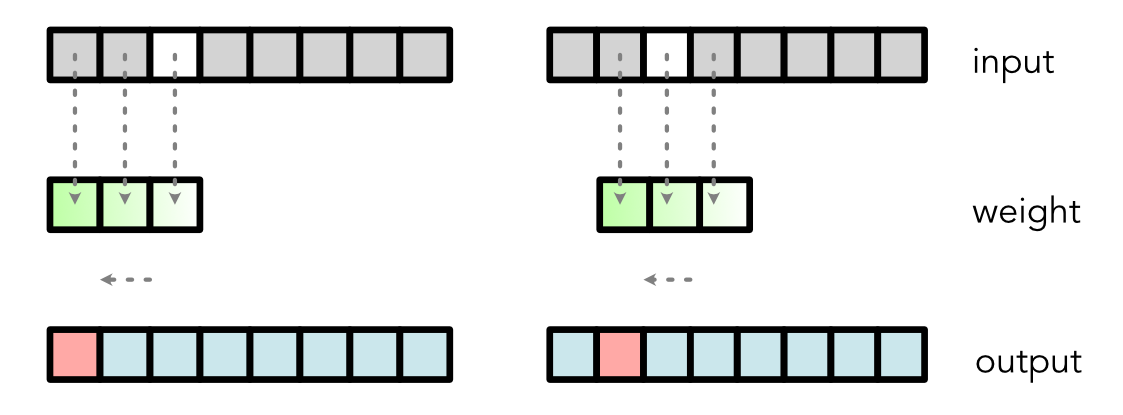
Computation
Output Values
  output[0] = weight[0] * input[0] + weight[1] * input[1]  + weight[2] * input[2]
  output[1] = weight[0] * input[1] + weight[1] * input[2]  + weight[2] * input[3]
output[2] = weight[0] * input[2] + weight[1] * input[3] + weight[2] * input[4]Gradient
class Conv:

    @staticmethod
    def backward(ctx, d):
        ...
        grad_input[2] = weight[0] * d[2] + weight[1] * d[1]  + weight[2] * d[0]
        ...
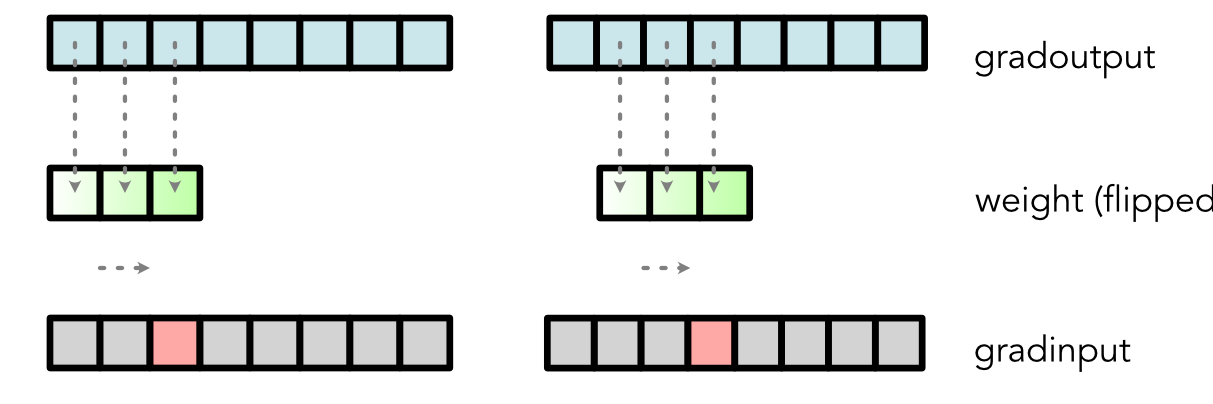
Graphical Representation
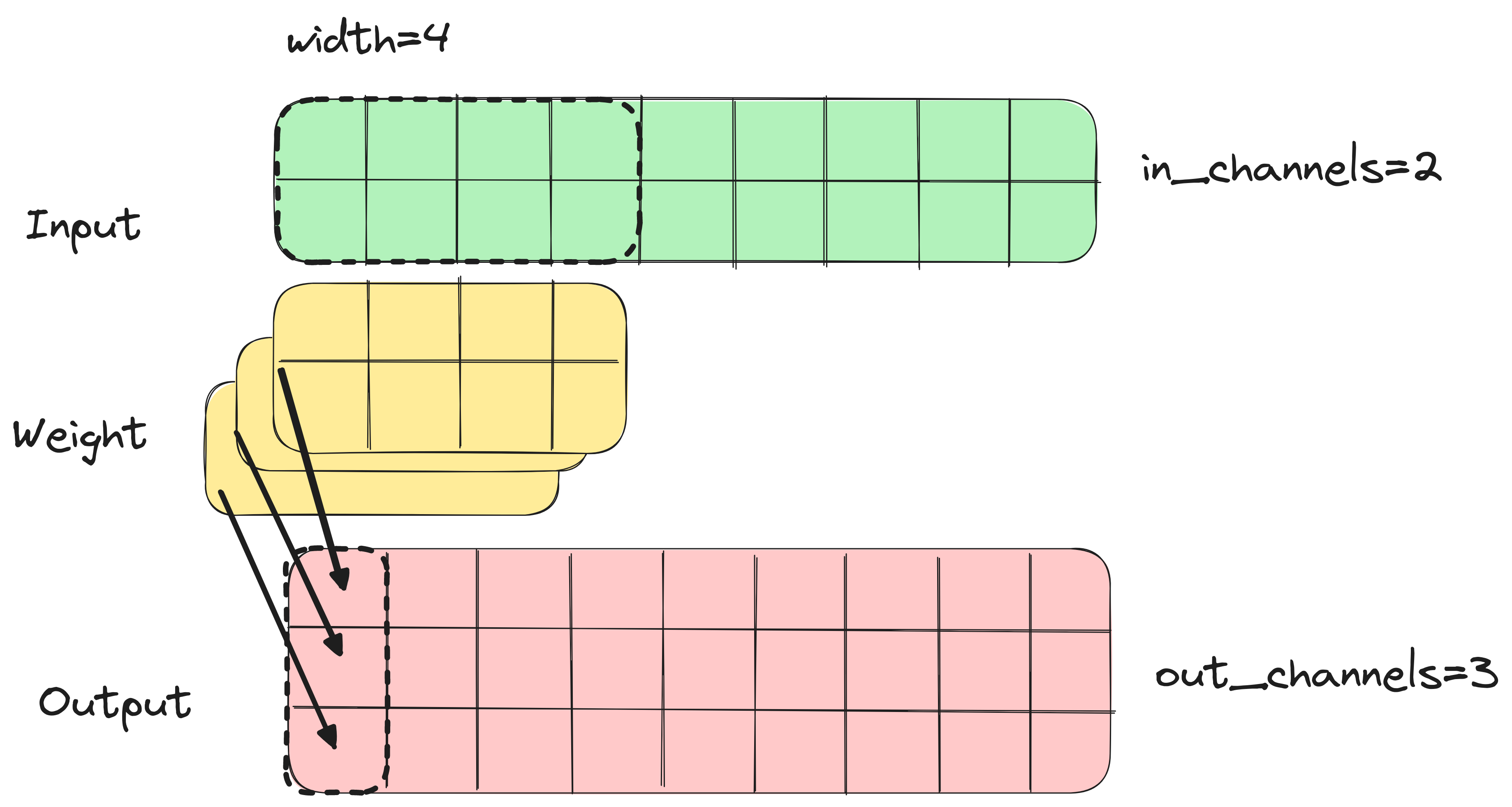
Two Dimensional Convolution
- Instead of line, now use box
- Box is anchored at the top-left
- Zip-reduce is over full box!
Convolution

Quiz
Quiz
Outline
- Local Pooling
- ReLU and Sigmoid
- Max and Softmax
Pooling
Challenge
- How do we look at bigger areas with convolutions?
Pooling
- Adjusts the scale at each layer
- Conv stays the same size, image "zooms" out
2D Pooling
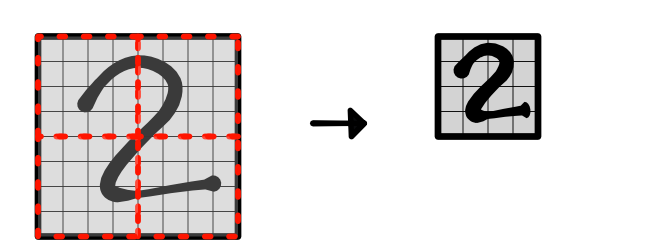
Goal
- Early layers: Capture basic shapes
- Middle layers: How these connect
- Later layers: Full objects
Example

Issues
- Number of parameters scale with weight size
- Bigger patterns require more ways to split data.
Standard Reduction


Why does this work?
- View requires contiguous tensor
- View(4, 2) makes strides (2, 1)
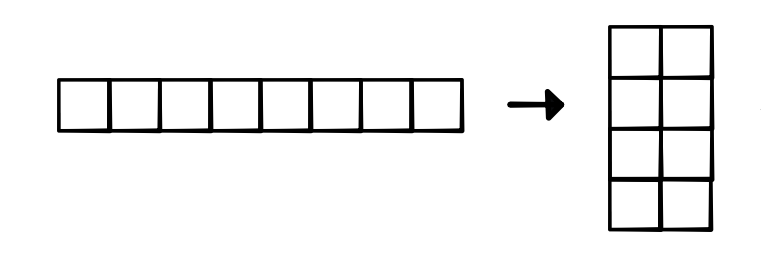
Simple Implementation
- Reduce along created fold
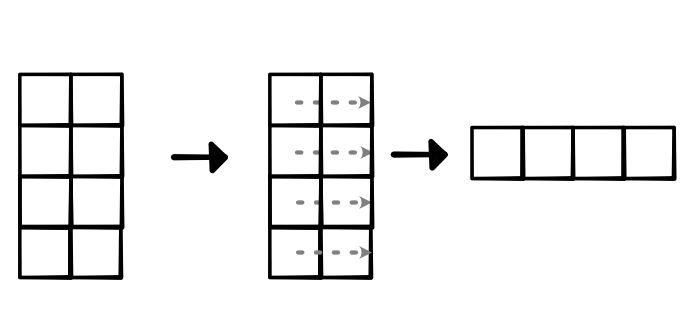
2D Pooling
- Need to isolate squares into a single dimension.
- Tensor origami :)
Exercise
- If I have a (10, 10) cube. How do I sum up neighboring rows?
- Goal (5, 10) cube.
ReLU, Step, Sigmoid
Basic Operations
- Introduced in Module-0
- Widely used in ML
- What is it?
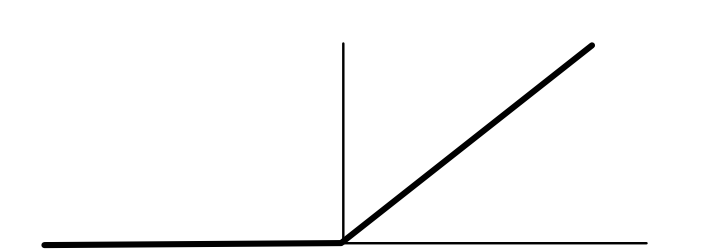
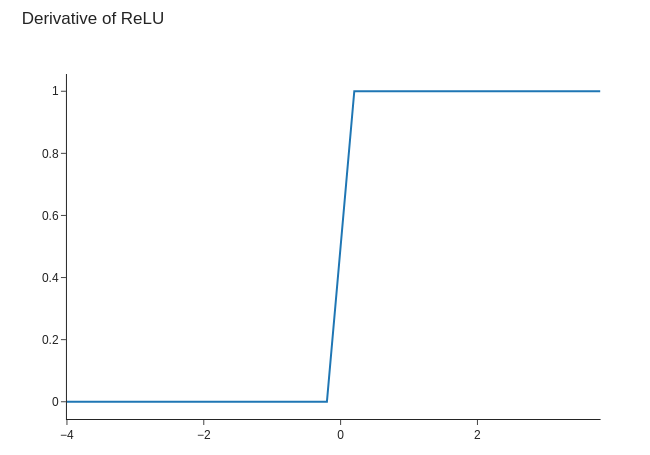
Relationship
Step is derivative of ReLU
$$ \begin{eqnarray*} \text{ReLU}'(x) &=& \begin{cases} 0 & \text{if } x \leq 0 \\ 1 & \text{ow} \end{cases} \\ \text{step}(x) &=& \text{ReLU}'(x) \end{eqnarray*} $$
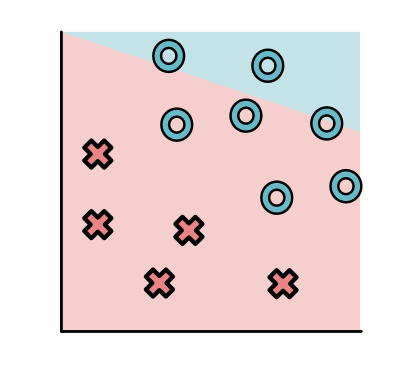
Derivative of Step?
Mathematically,
$$\text{step}'(x) = \begin{cases} 0 & \text{if } x \leq 0 \\ 0 & \text{ow} \end{cases}$$
Not a useful function to differentiate
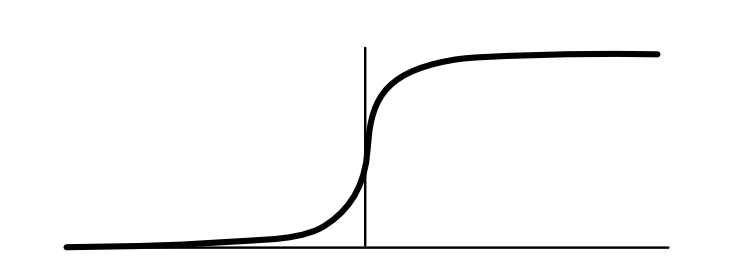
Sigmoid acts as a "soft" version
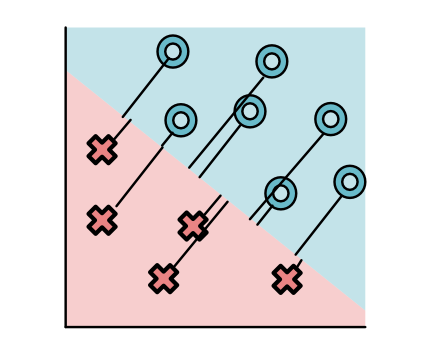
Soft (arg)max?
Would be nice to have a version that with a useful derivative
$$\text{sigmoid}(x) = \text{softmax} \{0, x\}$$
Useful soft version of argmax.
Max, Argmax, Softmax
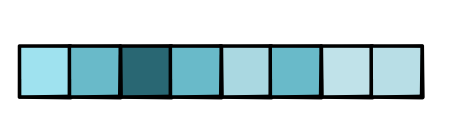
Max reduction
Max is a binary associative operator
$\max(a, b)$ returns max value
Generalized $\text{ReLU}(a) = \max(a, 0)$
Max Pooling
- Common to apply pooling with max
- Sets pooled value to "most active" in block
- Forward code is easy to implement
Max Backward
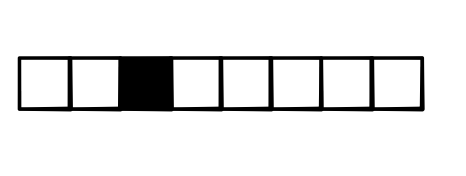
- Unlike sum, max throws away other values
- Only top value gets used
- Backward needs to know this.
Max Backward
- First compute
argmax - Only send gradient to
argmaxgradinput - Everything else is 0
Ties
- What if there are two or more argmax's?
- Max is non-differentiable, like
ReLU(0). - Short answer: Ignore, pick one
Soft argmax?
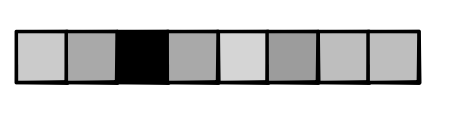
- Need a soft version of argmax.
- Generalizes sigmoid for our new loss function
- Standard name -> softmax
Softmax
$$\text{softmax}(\textbf{x}) = \frac{\exp \textbf{x}}{\sum_i \exp x_i}$$
Sigmoid is Softmax
$$\text{softmax}([0, x])[1] = \frac{\exp x}{\exp x + \exp 0} = \sigma(x)$$
Softmax
Review
- ReLU -> Max
- Step -> Argmax
- Sigmoid -> Softmax
Softmax
Softmax Layer
- Produces a probability distribution over outputs (Sum to 1)
- Derivative similar to sigmoid
- Lots of interesting practical properties
Softmax in Context
- Not a map!
- Gradient spreads out from one point to all.